|
| Varicose Veins |  |
| Spider Veins | |
| Risk Factor | |
| Vein Treatments | |

Who Gets Varicose and Spider Veins?
Venous insufficiency, the cause of varicose veins and spider veins, affects more than 30 million Americans. Several factors, ranging from family history to daily lifestyle factors can increase your risk of developing the disorder. People with a family history of varicose veins or spider veins have the highest risk of developing them. In fact, even elite athletes can develop varicose veins if they have a family history of venous insufficiency
Age
Getting older may raise your risk for varicose veins. The normal wear and tear of aging may cause the valves in your veins to weaken and not work well. In fact, one population study showed that about 25 percent of cases were seen in people under 50, with more than 75 percent occurring in people over 50.
Gender
Women tend to get varicose veins more often than men. Hormonal changes that occur during puberty, pregnancy, and menopause (or with the use of birth control pills) may raise a woman's risk for varicose veins. A recent population study showed that about two thirds of cases occur in women while about a third occur in men.
Pregnancy ("mommy veins")
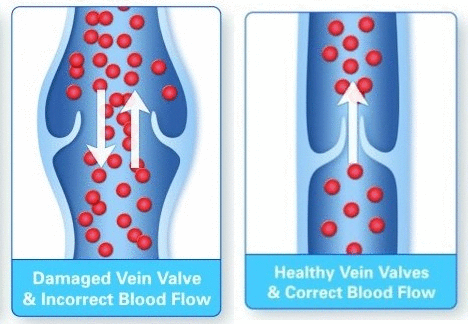
During pregnancy, your body goes through monumental physical and hormonal changes. As your baby grows, the uterus puts increased pressure on your veins. Hormonal changes can also cause the walls of the veins to relax. These factors can combine to cause the one-way valve in one or more veins to stop working. So, blood that should return to the heart instead pools and stagnates. And, studies show that varicose veins can get worse with each subsequent pregnancy.
Your doctor can recommend many ways to keep you comfortable during pregnancy, including regular, moderate exercise, plenty of rest, support stockings and keeping your legs elevated, especially during the evening. It is best to wait at least three months postpartum to seek treatment for venous insufficiency.
Overweight ("heavy veins")
Being overweight puts added pressure on the entire body, your veins included. Increased pressure can cause the veins to enlarge and damage the valves that keep blood flowing toward the heart. Often, people with weight problems are not getting regular exercise, which can lead to circulation problems and can make varicose veins worse. If you have a body mass index (BMI) over 25 you are more likely to develop varicose veins or spider veins.
Lack of Movement ("work veins")
If you stand on your feet all day, or sit for a long time, especially with your legs bent or crossed, you may pay a price: achy, tired, heavy legs caused by varicose veins. Lack of Movement can lead to blood flowing backwards and pooling, leading to varicose veins.
History of DVT
Patients who have had deep vein thrombosis (DVT), a blood clot that forms in a vein deep in the body, commonly in the leg or thigh, also may be more prone to developing varicose veins and spider veins. You may have heard about DVT in relation to sitting for long periods, such as on airplanes.