|
| Varicose Veins |  |
| Spider Veins | |
| Risk Factor | |
| Vein Treatments | |
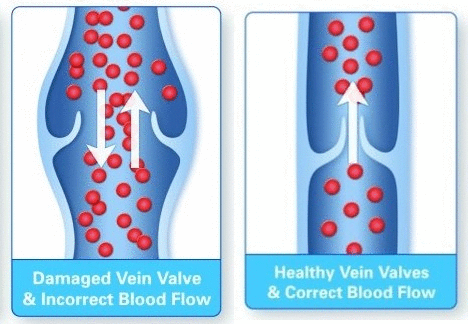

Not every condition related to venous insufficiency requires treatment; you and your doctor should discuss your unique situation and options that are right for you. Treatment of varicose veins ranges from a conservative, lifestyle-based approach to more advanced methods.
Lifestyle Changes
A conservative option for addressing varicose veins or venous insufficiency disease is to make lifestyle changes, such as eating less, exercising more, avoiding standing or sitting for long periods, avoiding tight clothes and avoiding high heels. Your doctor may recommend compression stockings. These stockings create gentle pressure up the leg to keep blood from pooling and decrease swelling.
TREATMENT OPTIONS
Radio Frequency Ablation
In this method, a thin catheter is inserted into the vein through the skin. The catheter emits radio waves, which heat specific areas of the affected vein, causing it to close. The catheter is withdrawn and the healing process begins. The closed vein is reabsorbed into the body and the blood supply in that area is naturally rerouted to other veins.
Laser Ablation
Similar to the radiofrequency procedure, a catheter is inserted through the skin into the affected vein. This catheter is equipped with a laser, which heats the vein and closes it. The catheter is withdrawn and the healing process begins. The closed vein is reabsorbed into the body and the blood supply in that area is naturally rerouted to other veins.
Ambulatory Phlebectomy:
Often, this relatively minor surgical procedure is routinely conducted at the same time as laser or radiofrequency ablations. The technique is performed through tiny stab incisions that usually do not require skin sutures to heal. The bulging vein is extracted through these small incisions.
Ultrasound-Guided Foam Sclerotherapy:
In this procedure, a medicine called a sclerosant is injected into the problem vein. It "foams," filling the vein and initiating a reaction that results in vein closure. Blood is then naturally rerouted around the affected area and the vein later is reabsorbed by the body. The physician administering the treatment uses ultrasonongraphy sound waves to guide the procedure for maximum accuracy and safety.
Visual Sclerotherapy:
This procedure is reserved for spider veins, which are smaller than varicose veins and are more of an issue of appearance. Similar to ultrasound-guided foam sclerotherapy, a medicine called a sclerosant is injected into the veins, initiating a reaction that causes them to close and be reabsorbed into the body. Unlike ultrasound-guided foam sclerotherapy, however, this treatment is done without the need for imaging equipment, but instead is done "visually" by a health professional. This appearance-related treatment is not normally covered by insurance.